Back-to-Schooling September: 7 Common Student Questions
At Greater Cleveland Aquarium, we believe that nature is a curious thing. Students who take part in our education programs share this curiosity by asking questions about aquatic life, the environment and a variety of other topics. Below are the answers to seven questions commonly asked by students because you just might have been wondering about the same things!
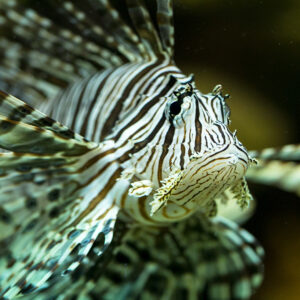
- Are poisonous and venomous animals the same thing?
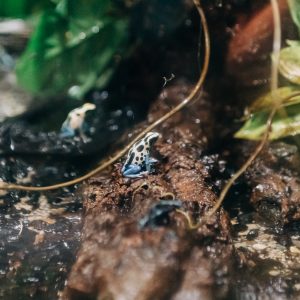
Not quite! Poisonous animals secrete their toxin from their bodies, but venomous animals inject their toxin via a bite or a sting. Basically, if something’s poisonous, the toxin from it is ingested; if something’s venomous, its toxin is injected.
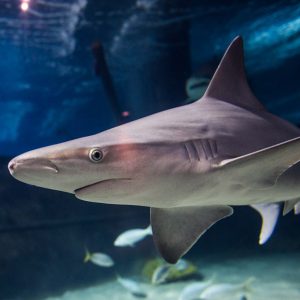
- Why aren’t the sharks eating fish that swim in the same habitat as they do?
Sharks are generally opportunistic hunters and feed on fish that are injured, dying or dead as they are easier to catch. It is unlikely the sharks you see at the Aquarium would choose to expend energy to chase down a healthy fish. Also, sharks eat several large meals a month in the ocean. Here they are offered food three times a week. Why hunt for dinner when you have a meal waiting for you?
- Aren’t the scuba divers frightened to be diving with sharks and worried they might be attacked?
No. While the divers are in the shark habitat, they respect the sharks by giving them their space. The sharks give the divers their space in return. While human-shark encounters do occur in the ocean, humans are not a shark’s natural prey. Sometimes if a human is on a surfboard, a shark can mistake them for a seal, but sharks do not intentionally hunt humans.

- Is it safe to touch stingrays?
Yes, it is safe to touch the stingrays. Stingray barbs are used only for defense. We trim the barbs on the tails of the stingrays, which is similar to the way humans trim their nails. The touchpool is deep enough to allow stingrays to come to the surface or swim deep if they prefer not to be touched.

- Why do I sometimes see a fish, turtle, stingray, etc. not moving?
Many of the species at the Aquarium have natural resting behaviors such as lying on habitat décor (i.e., plants, rocks, etc.), swimming in a stationary position and lying on the bottom of the habitat. Some species are also ambush predators, choosing to remain still until striking prey during a feed.
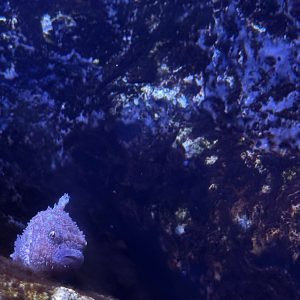
- Where do all the animals at the Aquarium come from?
The animals come from industry approved facilities. Many are from other zoos or aquariums. Others, like the majority of the cownose stingrays and weedy seadragons, were born onsite.
- Does the Aquarium have great white sharks?
No. Great white sharks do not thrive in aquarium settings, and no zoo or aquarium currently has this species. Great white sharks travel over thousands of miles over a year from tropical to cold temperate environments. Those conditions are not able to be replicated in an aquarium setting.

Visit the Greater Cleveland Aquarium during Back-To-Schooling September – Greater Cleveland Aquarium to ask any bubbling questions of your own!