Press ENTER to search, ESC to clear

Educational Opportunities at Greater Cleveland Aquarium

At Greater Cleveland Aquarium, we offer a variety of educational opportunities that provide inquiry-based, hands-on learning experiences.

Aquarium educator leading a field trip.
#1: School Field Trips: Field trips enhance Ohio’s Learning Standards and Next Generation Science Standards for all ages, from preschool to college, with topics such as habitats, adaptations, food chains and conservation. Each program, led by Aquarium Educators, begins with a brief introduction to the topic. Students are placed in small group sizes, which provides them with the opportunity to ask questions and spend sufficient time exploring. Along with guided tours, we also offer lab classes covering topics such as squid dissection, water quality and urban birding, where students can participate in hands-on learning outside of the classroom.
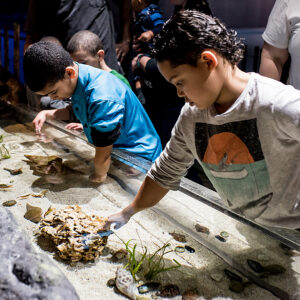
Homeschool kids at Greater Cleveland Aquarium.
#2: Homeschool Opportunities: The Aquarium also offers homeschool co-op classes with guided tours focused on topics similar to our school field trips. In addition, Homeschool Family Days provide an opportunity for families to enhance their homeschool journeys with self-guided scavenger hunts through the galleries using themed activity sheets curated for students of all ages. These programs are offered throughout the year, with each day featuring a different fun and educational topic. Throughout the experience, families can visit our educator-led stations for hands-on learning and participate in daily activities.
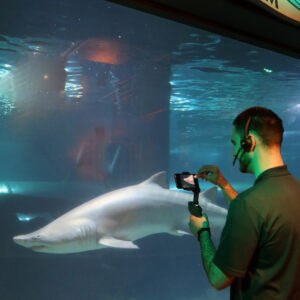
Virtual tour at Greater Cleveland Aquarium.
#3: Virtual Programs: In addition to in-person programs, we have virtual programs that allow larger groups to learn in the comfort of their home bases without the need to travel. These programs provide live educator-led tours throughout the Aquarium that enable participants to ask questions as they explore each gallery. These programs are customizable so organizers can choose their desired program length and topic, such as Animal Senses, Invertebrates, Camouflage or Wild, Weird & Creepy.
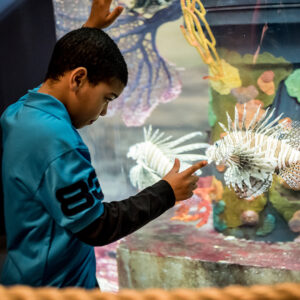
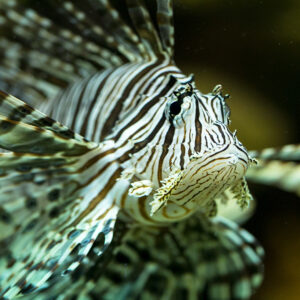
Middle schooler looking at lionfish at Greater Cleveland Aquarium.
#4: Career Days: Middle school and high school students interested in pursuing careers in our field can register for our Middle School and High School Career Days, giving them the opportunity to meet real-life educators, guest experience staff, aquarists and divers while learning about the many fascinating jobs that keep an aquarium running. High school students can also learn about Aquarium team members’ career journeys, educational paths and tips on building resumes and preparing for college. Each program has its own specific, hands-on, interactive experiences related to the content throughout the day.


#5: Girl Scouts & Self-Guided Groups: Along with our Aquarium Educator-led tours, we also partner with Girl Scouts of Northeast Ohio to offer badge-related programs. Registration, pricing and program descriptions are available on the council website and in the seasonal program guides here. In addition, we offer discounted admission rates for self-guided groups, including schools, summer camps, youth or adult groups. Self-guided groups are able to explore Aquarium galleries at their own pace with opportunities to participate in daily activities. We also welcome groups with special needs, and our building is wheelchair accessible. Accommodations, including a small comfort room, three reservable wheelchairs and KultureCity sensory bags are available.

If we’ve piqued your natural curiosity, visit greaterclevelandaquarium.com/education-field-trips/ for additional information or to schedule a program. Bring along your “school of students” to learn some fin-tastic facts while exploring aquatic habitats from around the world. We hope to “sea” you soon!

– Lindsay
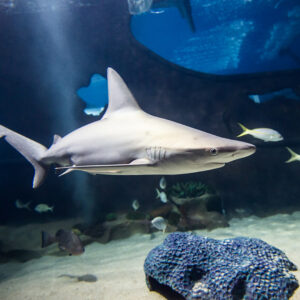
Back-to-Schooling September: Questions from Guests!

Thank you for submitting your curiosity questions during Back-to-Schooling September. Here are answers to some of the questions that we did not yet answer on social media.

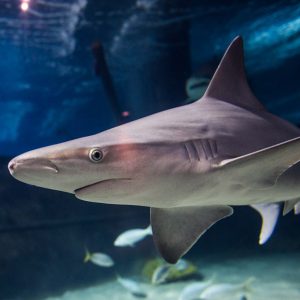
Sand bar shark at Greater Cleveland Aquarium.
How do sharks sleep?
Sharks do not sleep like humans do, but they do have restful and active periods. Because many sharks must swim constantly to breathe, they only rest half of their brain at a time; the other half stays awake to maintain basic functions like swimming. They also don’t have eyelids to close, so their eyes stay open while resting.


Do fish fart?
Fish can release gas for a variety of reasons, but it’s not usually due to digestion. Many fish have swim bladders to control their buoyancy in the water; they release gas to adjust their position in the water. Some fish release gas to communicate to one another in schools. Fish that lack swim bladders, like sharks, typically do not fart.

Moon Jelly at Greater Cleveland Aquarium.
How many tentacles do jellyfish have?
Jellies (they’re invertebrates, not fish) have a wide range of species and therefore a wide range of tentacles. Moon jellies, like you can see at the Aquarium, typically have 8 tentacles with stinging cells for trapping food and 4 frilly oral arms that help clean the body and direct food to the mouth. Other species like lion’s mane jellies can have hundreds of tentacles, and the tentacles on a Portuguese man o’ war jelly can be more than 30 feet long! 

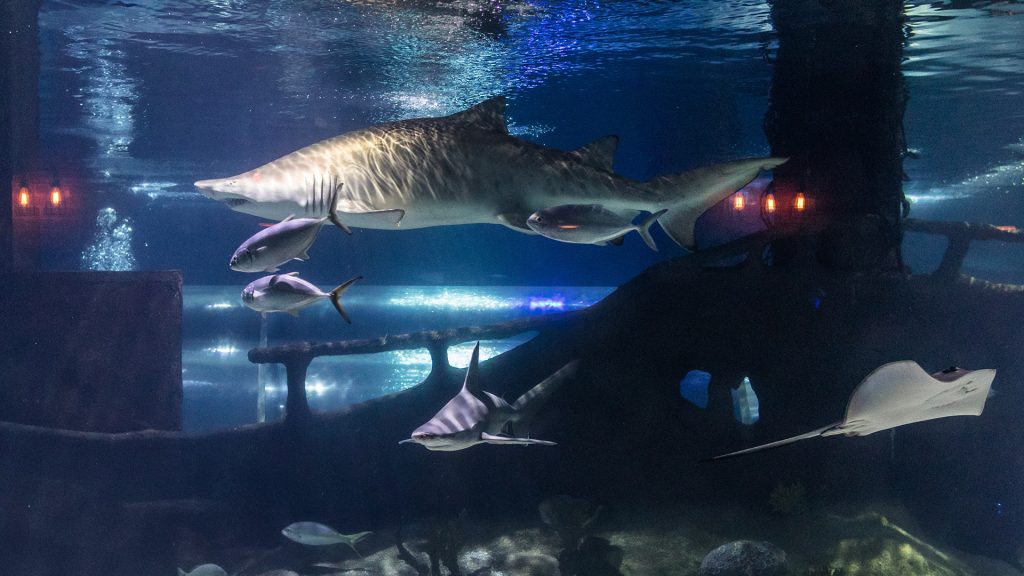
Sand tiger shark at Greater Cleveland Aquarium.
Will you get a hammerhead shark?
A top priority of the Aquarium is animal wellbeing. Habitats at the Aquarium must provide the needs of animals to not only survive but thrive. Hammerhead sharks have needs that cannot be met well in an Aquarium setting. Their large size (13 feet long) and constant movement would require a huge open space, larger than the Aquarium can accommodate in a historic building. Hammerheads are also highly sensitive to changes in water quality, light and noise, which could cause significant stress in an Aquarium setting. And, hammerhead sharks are a highly social species, spending time in large schools. In order to properly care for a hammerhead, you’d need a whole group of other hammerheads too. 

Kid touching a stingray at the Greater Cleveland Aquarium touchpool.
Why is the water for the stingrays deep?
The stingrays in the touchpool have choice and control over their environment. If they are curious and want to come to the surface within touching range, they can. If they want a break or a rest, they can swim deeper in the water to avoid interaction. The deeper pool helps ensure healthy stingray wellbeing. 

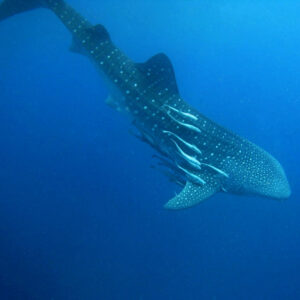
A whale shark swimming.
What is the difference between a whale and a whale shark?
Whales are mammals. They have hair, are warm-blooded and produce milk to feed their young. Whale sharks are fish. They are covered in dermal denticle scales, are cold-blooded and their young are on their own from birth.

Crevalle jack and sand bar shark swimming next to each other.
Do the fish eat each other? Do the sharks eat the fish?
Careful consideration goes into planning what types of fish can live together at the Aquarium and into the design of the habitats themselves. The animal care team also puts a ton of energy into ensuring each animal is provided a healthy diet to ensure its wellbeing. Plan to visit the Aquarium during our next shark, gamefish or Amazon River habitat feed to learn more about the specifics.

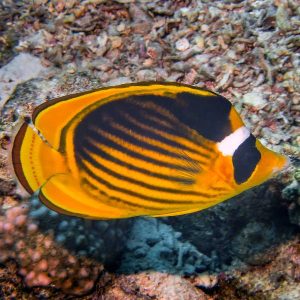
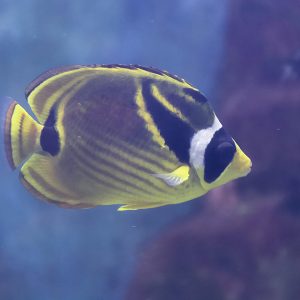
Raccoon Butterflyfish.
Why do fish swim so fast?
Fish are well adapted to their specific habitats and not all fish swim fast. Fish that live in open water often have forked or crescent shaped tails to swim fast to avoid predators. Other fish, like coral reef dwellers have rounded or wedge-shaped tails to swim slowly through the rocks and corals on the reef.

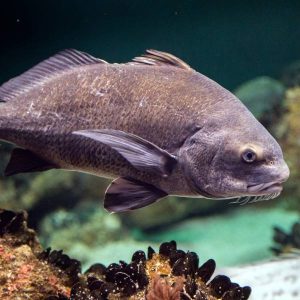
Black drum fish.
How do fish breathe?
As humans, we use lungs to breathe oxygen from the air around us. Fish use gills to breathe oxygen from the water. Some fish have an organ to pump water through their gills while resting, most sharks swim constantly to pass water through their gills, and moray eels gulp water through their mouth to pass over their gills.


What happens to the fish poo?
Keeping habitats clean is a lot of work and requires a team effort. The life support systems (LSS) team at the Aquarium manages the pumps and filters on each habitat that work to filter out waste. There are also helpful bacteria in the water that break down the waste, and the LSS team routinely does water changes to control the ammonia levels in the water that can build up from fish waste. Additionally, the animal care team spends time scrubbing the walls and vacuuming the sand or gravel in the habitats to remove algae and waste. The dive team does this in the larger habitats like shark, stingray touchpool, coral reef, and others.

Is your curiosity still burning? Check to the Aquarium’s YouTube channel to learn more about the Aquarium and aquatic life.

Back-To-Schooling September: A Teacher’s Perspective

With buses, lunches, permission slips and other details, it takes dedication and coordination to organize student field trips. We are thankful to teachers who coordinate this experience for their students every schoolyear. We asked seasoned educator Dan Dahnert to chat with us about what Aquarium field trips mean for his students and what keeps him returning year after year.

“I teach seventh- and eighth- grade science and math at St. Dominic School in Shaker Heights.  We started doing field trips to the Aquarium in May 2018 with the eighth-grade class for squid dissection and a tour.  The program offered at the Aquarium fits the Science curriculum very well and is an easy trip for schools around the city.  Each year, some of the students have never been to the Aquarium (which shocks me), and most of the other students have only been when they were a lot younger.

We usually dissect an earthworm or fish before the field trip to get them ready for the experience.  They react in many different ways to the squid dissection—some are all in, but some just want to leave the room because of the smell.  I encourage them to participate since they will be doing more labs like this in high school.  It is definitely a memorable experience for them; students who come back to visit St. Dominic update me on what they’ve dissected in high school and are appreciative of the opportunity to start in eighth grade.

The tour of the Aquarium [for this particular program] is self-guided, and we spend time talking about invasive species like the lionfish and the sea lampreys.  I enjoy seeing the piranhas since I had one for a while growing up (his name was Fang).  They seem to like the sharks the most, followed by the octopus, the stingrays and the gift shop.  Students get especially excited whenever there is a scuba diver in the shark habitat.

I try to take advantage of the teacher programs offered at the beginning of the year each year to visit for free and find out about any new programs.  It is easy to set up a field trip with the staff during the winter to prepare for the field trip later in the year.  I know the students will get a quality experience at the Aquarium each May.”

Dave Dahnert
St. Dominic School
Shaker Heights, OH

Back-to-Schooling September: 7 Common Student Questions

At Greater Cleveland Aquarium, we believe that nature is a curious thing. Students who take part in our education programs share this curiosity by asking questions about aquatic life, the environment and a variety of other topics. Below are the answers to seven questions commonly asked by students because you just might have been wondering about the same things!

  1. Are poisonous and venomous animals the same thing?

Not quite! Poisonous animals secrete their toxin from their bodies, but venomous animals inject their toxin via a bite or a sting. Basically, if something’s poisonous, the toxin from it is ingested; if something’s venomous, its toxin is injected.

  1. Why aren’t the sharks eating fish that swim in the same habitat as they do?

Sharks are generally opportunistic hunters and feed on fish that are injured, dying or dead as they are easier to catch. It is unlikely the sharks you see at the Aquarium would choose to expend energy to chase down a healthy fish. Also, sharks eat several large meals a month in the ocean. Here they are offered food three times a week. Why hunt for dinner when you have a meal waiting for you?

Sandbar shark swimming through Greater Cleveland Aquarium habitat.

  1. Aren’t the scuba divers frightened to be diving with sharks and worried they might be attacked?

No. While the divers are in the shark habitat, they respect the sharks by giving them their space. The sharks give the divers their space in return. While human-shark encounters do occur in the ocean, humans are not a shark’s natural prey. Sometimes if a human is on a surfboard, a shark can mistake them for a seal, but sharks do not intentionally hunt humans.

  1. Is it safe to touch stingrays?

Yes, it is safe to touch the stingrays. Stingray barbs are used only for defense. We trim the barbs on the tails of the stingrays, which is similar to the way humans trim their nails. The touchpool is deep enough to allow stingrays to come to the surface or swim deep if they prefer not to be touched.

  1. Why do I sometimes see a fish, turtle, stingray, etc. not moving?

Many of the species at the Aquarium have natural resting behaviors such as lying on habitat décor (i.e., plants, rocks, etc.), swimming in a stationary position and lying on the bottom of the habitat. Some species are also ambush predators, choosing to remain still until striking prey during a feed.

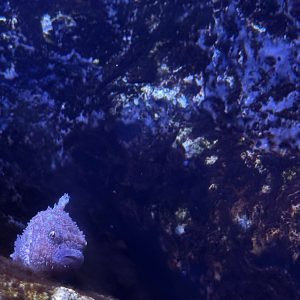
Pacific spiny lumpsucker sitting on rock at Greater Cleveland Aquarium.

  1. Where do all the animals at the Aquarium come from?

The animals come from industry approved facilities. Many are from other zoos or aquariums. Others, like the majority of the cownose stingrays and weedy seadragons, were born onsite.

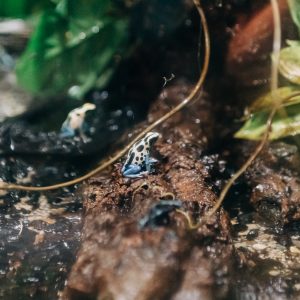
Dyeing Poison Dart Frogs

  1. Does the Aquarium have great white sharks?

No. Great white sharks do not thrive in aquarium settings, and no zoo or aquarium currently has this species. Great white sharks travel over thousands of miles over a year from tropical to cold temperate environments. Those conditions are not able to be replicated in an aquarium setting.

Visit the Greater Cleveland Aquarium during Back-To-Schooling September – Greater Cleveland Aquarium to ask any bubbling questions of your own!

10 More Things We Now Know About Sharks & Rays

Sharks and stingrays at Greater Cleveland Aquarium.

It’s the time of year when we take a deep dive into our collective fascination with sharks and stingrays. And, as it turns out, there’s still a lot for us to learn about them.

While they’re disappearing at an alarming rate—with at least fifty percent fewer sharks and rays in the ocean today than there were in 1970 and as many as one-third of all known shark and ray species threatened with extinction—new information on elasmobranchs continues to surface all the time.

Here are just a few of the new theories and findings that have come to light over the past few months:

Are you a shark and ray fan? Follow us on Facebook, sign up for our e-news or subscribe to our YouTube channel for more information on elasmobranchs and other aquatic life.

-Samantha F.

Sharks at #CLEAquarium!

Join Aquarist Ryan as he shares fun facts about the 4 species of sharks residing at the Aquarium in the video below!

Enjoy the video? Join us for a celebration of sharks and stingrays during Fin Fest, now – August 5.

Where Do Shark’s Teeth Go?

The Aquarium divers find tons of shark teeth during daily operations! We’re showcasing the different types of teeth they find and how they’re adapted to each species in the video below!

Join us for a celebration of sharks and stingrays during Fin Fest, now – August 5.

What’s In a Name?

How animals earn their monikers can be surprising. Their common names can come from the places they’re found, the people who discovered them or even fictional characters. The names of the ten Aquarium residents below are inspired by their appearance and/or actions.


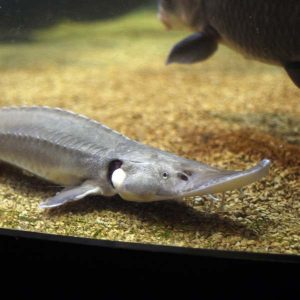
shovelnose sturgeonShovelnose Sturgeon – Check out that shovel-shaped snout.
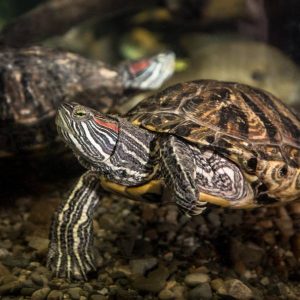
 

Red-eared slider turtle.Red-eared Slider – This turtle is named for the red patch on its ear AND the way it slides into the water when startled.
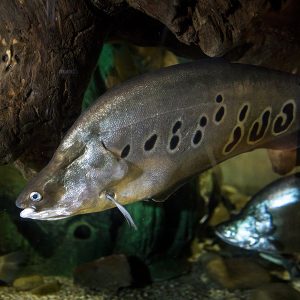
 

Clown Knifefish – This fish’s knife-like shape allows it to swim both forwards and backwards.
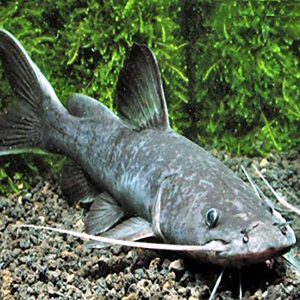
 

Crystal-eyed Catfish – Frank Sinatra might have been “ol’ blue eyes,” but this catfish gets attention for its light blue peepers.
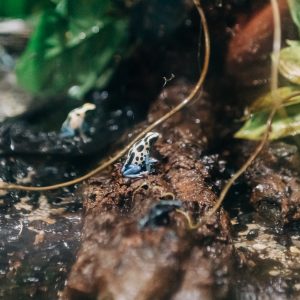
 

Dyeing Poison Dart Frog – This name comes from an unverified legend that indigenous people used these colorful frogs to dye parrot feathers.
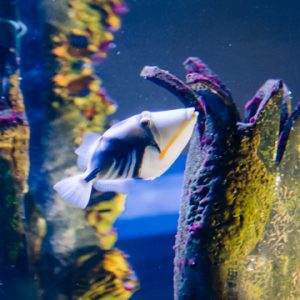
 

picasso triggerfishPicasso Triggerfish – This peculiar-looking fish has bright, artsy colors AND a dorsal spine will raise when startled.
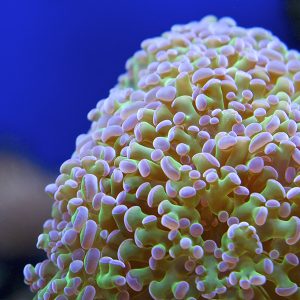
 

Hammer Coral – Note the hammer shape of these coral polyps.
 

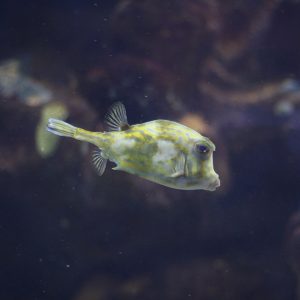
Scrawled Cowfish – The “horns” above its eyes and irregular body markings are what give the scrawled cowfish a distinctive appearance.


Raccoon Butterflyfish – This butterflyfish is named for the black-and-white “mask” around its eyes.
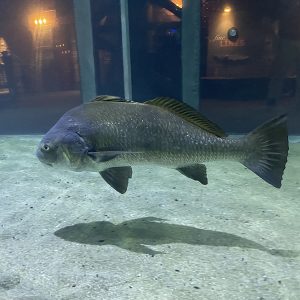
 

Black Drum – This fish can make drumming or croaking sounds with muscle movement around its swim bladder.


See these and other animals with interesting names and backstories at Greater Cleveland Aquarium.

-Lili F.

*Hammer Coral Photo Courtesy David Davies, via Flickr.com